Where a Path Becomes a Garden: Reading the Edge Between Them
Learn to read the path-to-garden boundary by noticing surface, planting and use, then choose an edge that separates spaces without making a hard barrier.
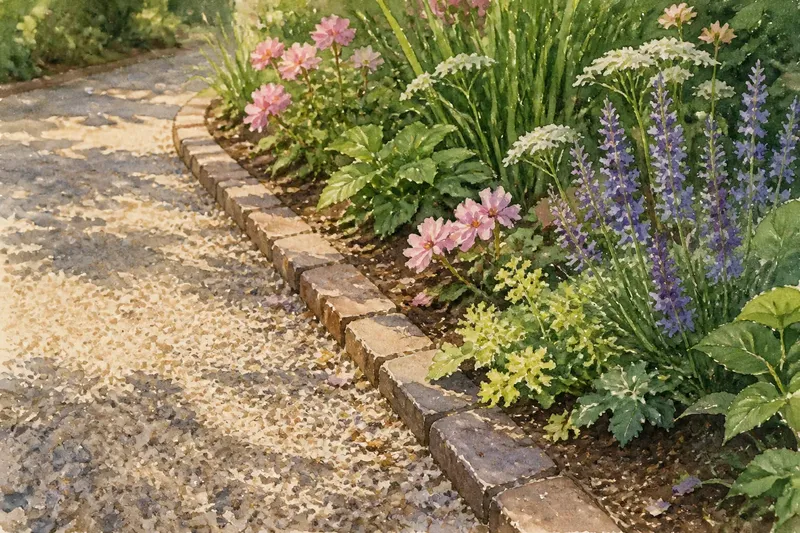
A path-to-garden boundary can be a line of brick, a shift from gravel to soil, or simply the point where footsteps stop and plants begin. To read the edge between them, notice what changes underfoot, what grows beside the route, and how people use the strip in between. Those clues show whether the boundary needs to guide movement, protect planting, or remain almost invisible.
Start with the scene as it is, rather than deciding that every path needs a crisp border. A boundary is doing useful work when it helps people recognise where to walk and where to let things grow. Its best form depends on the ground, the plants and the habits it has to accommodate.
What kind of edge does the space need?
Choose by the problem you can actually see. A bed spreading onto a narrow walkway calls for a different response from a broad lawn path that needs only a visual cue. An edge can be distinct without being a wall: a change in material, a low line of planting or a shift in how the ground is cared for may be enough.
- Choose a clear physical border if loose gravel or soil keeps moving onto the walking surface. A restrained line of stone, brick or metal can mark the change and hold materials in place.
- Choose a surface change if people already know where to walk but the path is difficult to read visually. Pavers against bark mulch, for instance, define two uses without raising an obstacle.
- Choose a planted edge if the garden should feel continuous with the route. Low, tidy plants can suggest the limit while keeping the view open.
- Choose a soft, shifting edge if the planting is informal or seasonal. A gradual change from clipped grass to taller flowers may suit the scene better than a rigid line.
- Choose no added border if the existing difference in surface and use is already clear. More material can create maintenance without solving a real problem.
Think of these as options, not a ranking. The right choice is the least forceful one that helps the space work as intended.
When does a hard border fit?
A hard border fits when the edge needs to stay in place despite frequent foot traffic or materials that readily spill. A narrow path beside a bed of loose gravel is one such setting; a low stone course may separate the surfaces while making the route easy to recognise. A firm edge can also make mowing or sweeping more straightforward, provided it sits comfortably with the surrounding ground.
Hard does not have to mean tall or visually dominant. A flush line of pavers can create a clear transition while remaining easy to cross. Raised edging, by contrast, announces the boundary more strongly and may interrupt a route that people or garden equipment need to cross. Consider the actual movement through the space before selecting either form.
Materials also change the character of the edge. Brick can echo a paved path; natural stone may sit more quietly beside mixed planting; a narrow metal strip can give a clean division with little visual weight. If those materials are unfamiliar, check the product instructions and relevant local requirements before choosing or installing them.
When is a soft edge a better fit?
A soft edge suits places where the garden should seem to flow towards the path, or where a strict line would look out of place. Low groundcover, a band of ornamental grasses or a gradual change from lawn to planted ground can make the transition legible without stopping the eye. This often works well beside a winding route, where a ruler-straight border would argue with the path’s shape.
Look at the mature form of the plants, not just their appearance at the garden centre. A plant that spreads across paving may turn a subtle edge into a constant trimming job; a dense plant may narrow the usable route. Choose growth that fits the available space and the amount of tending you want to do.
A soft edge still needs a readable cue. If the planting is low and the surfaces are similar, the boundary may disappear, especially where the route bends. A modest difference in texture or a repeating group of plants can clarify the line without adding a solid barrier.
How should you decide between surface, planting and use?
Read the edge through three questions: what changes underfoot, what happens at the planting line, and where do people naturally go? If all three point to the same division, a modest boundary may be enough. If they disagree, decide which function matters most. A path used to carry a wheelbarrow, for example, needs a dependable clear route even if the garden’s visual edge is loose.
Imagine a narrow gravel path beside a flower bed, with gravel scattered among the plants and visitors stepping around the mess. The starting point is a surface that migrates and a route whose usable width is unclear. Adding a low, continuous edge between gravel and soil, then keeping the path’s walking line open, could make the division easier to read and reduce accidental trampling. If the bed instead sits well back from the route and the gravel stays put, that added border may be unnecessary.
It is not worth adding several materials, contrasting colours and a row of decorative edging simply to make the boundary noticeable. Each extra element can compete with the plants and create another line to maintain. Use the fewest cues that make the two spaces understandable.
What should you look for at a path-to-garden boundary?
How can you tell if the path needs a stronger edge?
Look for material repeatedly moving onto the route, plants being stepped on, or people taking an awkward detour. If these signs are absent and the path remains easy to follow, a strong border may add more than the space needs.
Which plants work beside a garden path?
Consider low-growing plants that suit the light and soil and are unlikely to spread into the walking line. Leave room for their mature shape, and favour a planting that can be maintained without constant clipping.
Can a garden edge be defined without edging material?
Yes. A clear change from paving to mulch, a mown strip beside taller planting, or a repeated row of low plants can mark the transition. It works best when the surface change and everyday use already support the same line.
How can you check whether a boundary is working?
Observe the route during ordinary use: notice where feet land, where loose material gathers and whether plants are being brushed aside. If people can follow the path and the planting stays in its intended area, the edge is communicating clearly.
How can the edge stay clear as the garden changes?
Plants grow, mulch shifts and paths become more familiar through use. Check the boundary occasionally for a specific change rather than treating it as a permanent design decision. If a spreading plant begins to obscure the route, it may need trimming or a little more room; if an edging line becomes an obstacle, the layout may need reconsideration.
Pay attention to seasonal changes, too. A planted edge that is easy to see in summer may disappear when flowers fade, while a strip of paving remains visible throughout the year. Where the route needs to stay legible in every season, pair planting with a dependable surface cue rather than asking foliage to do all the work.
For a path-to-garden boundary, a useful decision is not simply hard or soft. Ask what the edge must distinguish, how clearly it should guide movement, and whether the surrounding materials already provide that clue. When the surface, planting and use make sense together, the boundary can be clear without feeling like a wall.